
BLOG
AM Refrigeration Insights
Here's What It Means for Your Walk-In or Rack System
The Regional Reality: This Climate Is Brutal on Equipment
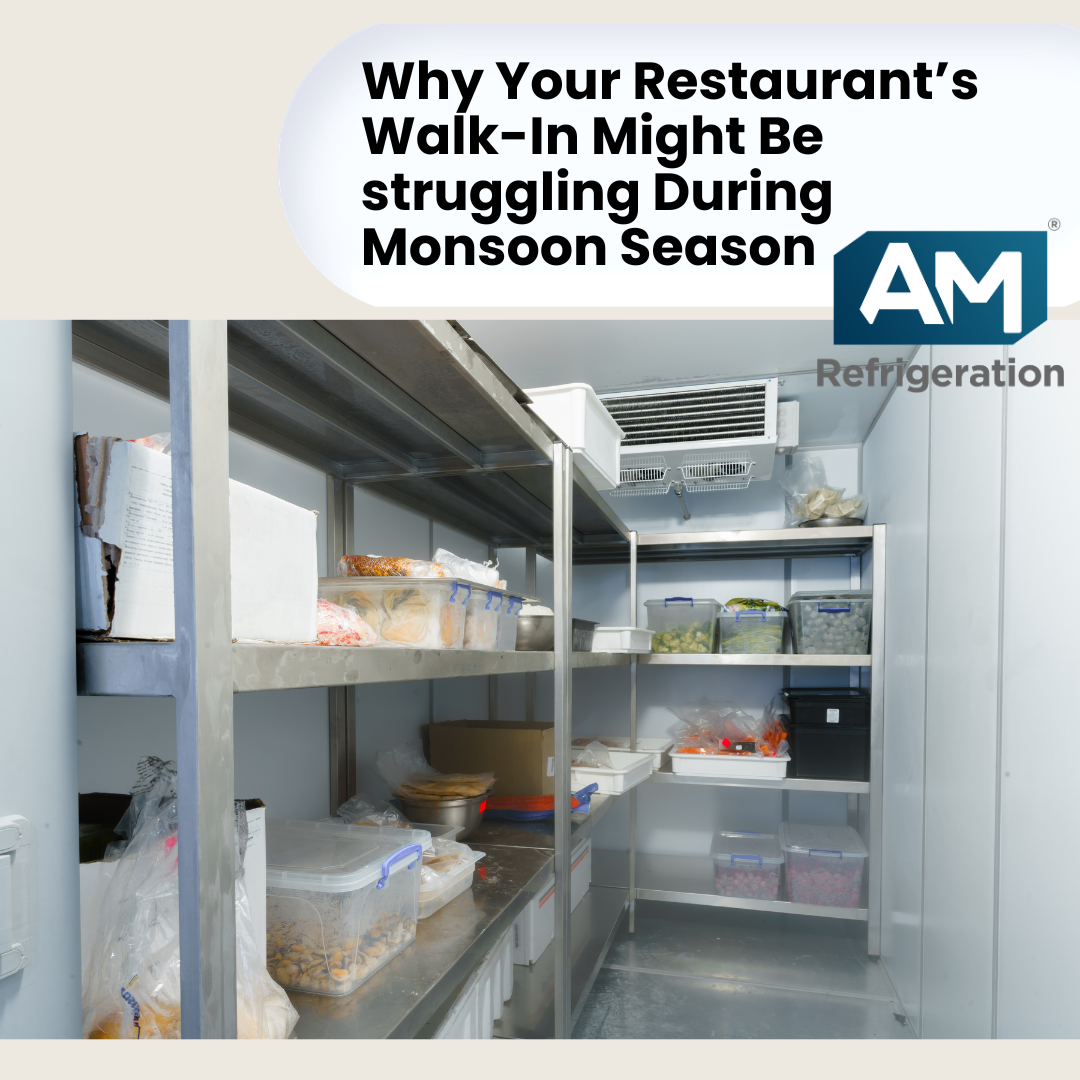
That West Texas rain can cause serious issues.
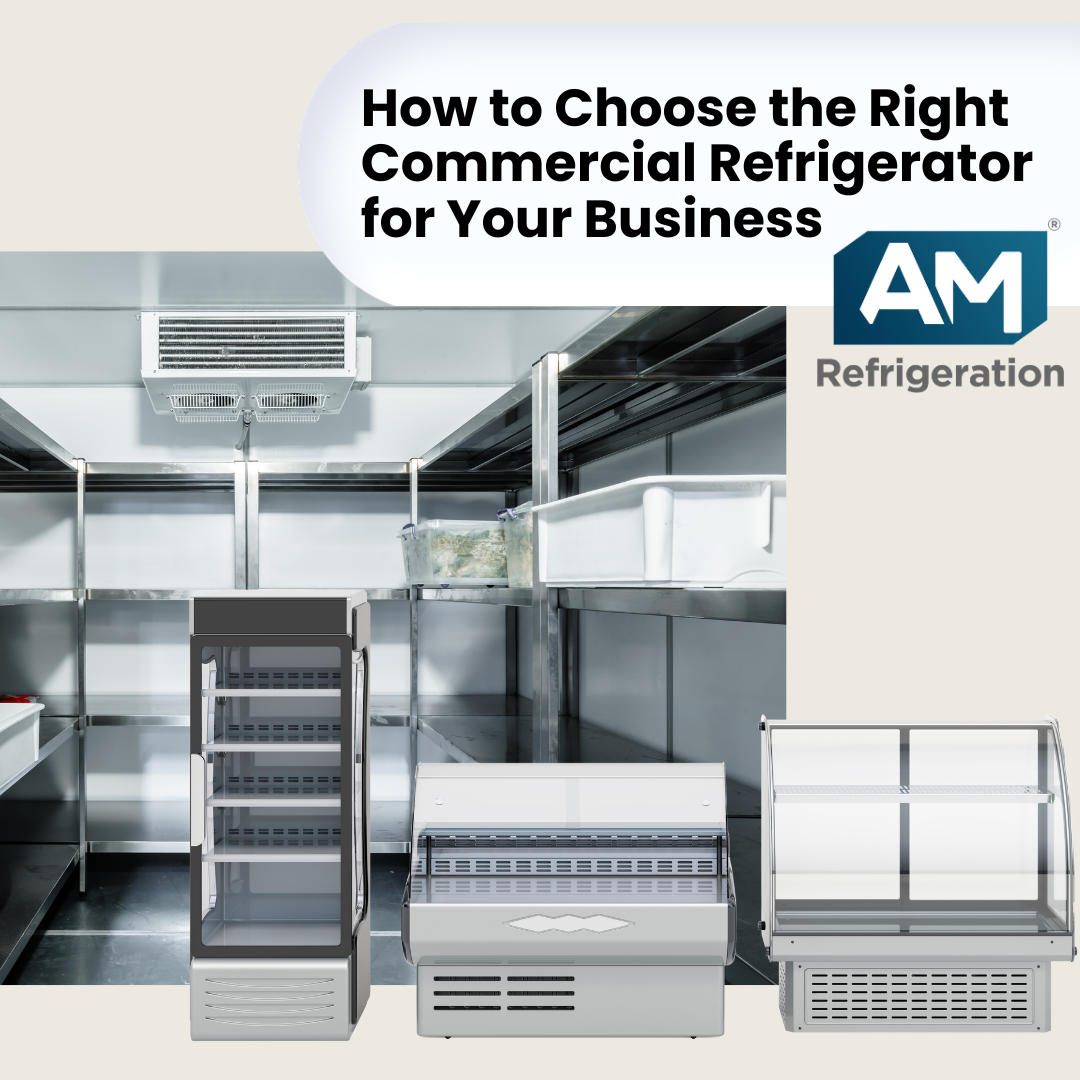
A West Texas Guide
What You Need to Know Before Summer Hits
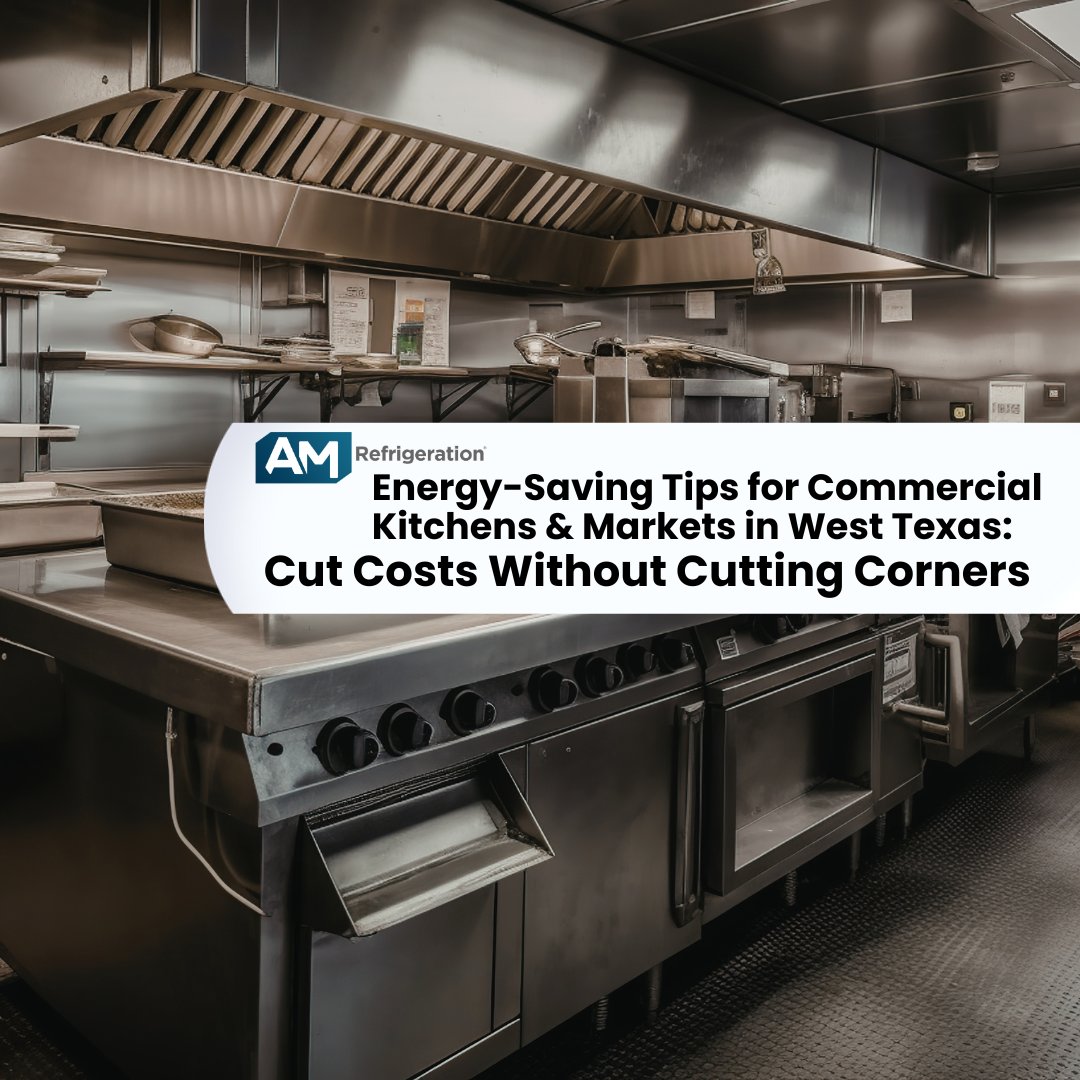
West Texas summers are merciless. When outdoor temps hit 105°F and your commercial kitchen is running at full capacity, your energy bills don't just go up—they skyrocket. For restaurant owners, grocery store managers, and market operators across El Paso and the surrounding region, energy efficiency isn't a luxury. It's survival. The good news? Strategic upgrades to your refrigeration systems and kitchen ventilation can slash energy costs by 20-40% without sacrificing performance or food safety. Here's how to get there. Why Energy Efficiency Matters in West Texas Commercial Kitchens The West Texas climate creates unique pressures on commercial refrigeration. Our high desert heat means your cooling systems work overtime. A standard commercial refrigerator in Dallas might run 8,000 hours annually. In El Paso, that number climbs. Every degree your unit works harder translates directly to higher utility bills and faster equipment wear. Beyond dollars, there's a competitive edge: customers increasingly choose businesses with sustainable practices. And regulators are watching. Energy codes are tightening across Texas, and staying ahead of compliance saves headaches (and fines) later. 1. Upgrade to High-Efficiency Refrigeration Appliances Your walk-ins, reach-ins, and display cases are likely your single biggest energy draw. If your equipment is more than 10-15 years old, upgrading is almost always worth it. Modern commercial refrigeration systems are 30-50% more efficient than units from 2010. They use: • Advanced insulation with better thermal barriers • Variable-speed compressors that match cooling output to actual demand (instead of running at full blast constantly) • High-efficiency evaporators and condensers that transfer heat more effectively • Better door seals and hinges that reduce infiltration For West Texas operations, this matters enormously. New units are engineered to handle higher ambient temperatures without overworking their compressors—meaning they run cooler and cost less to operate, even during triple-digit summers. Pro tip: When shopping, look for ENERGY STAR certified equipment. Yes, the upfront cost is higher, but you'll recover it in 3-5 years through lower energy bills. 2. Optimize Your Kitchen Exhaust System A kitchen without proper exhaust is a kitchen fighting heat every second. But an oversized or poorly maintained exhaust system is wasting conditioned air—and money. Commercial kitchen exhaust systems remove hot air, smoke, and cooking vapors. The problem? They pull conditioned air right out of your building. In a West Texas summer, that's expensive air. Here's how to optimize: • Right-size your hood. Too large and you're exhausting more than necessary. A professional audit can identify the right CFM (cubic feet per minute) for your kitchen layout. • Install demand-controlled kitchen exhaust. These systems modulate fan speed based on actual cooking activity. When you're not cooking, the fan backs off. When orders spike, it ramps up. Energy savings: 15-30%. • Seal gaps and leaks. Cracks around ductwork and dampers cause significant infiltration loss. Have a professional inspect your exhaust system annually. • Use high-velocity, low-volume (HVLV) hoods where applicable. They capture heat and smoke more efficiently, requiring less exhaust volume. When paired with complementary makeup air systems, your kitchen stays comfortable while your utility costs drop. 3. Keep Condenser Coils Clean (and Keep Doing It) This sounds basic—because it is. And it's also the most neglected maintenance item we see. A dirty condenser coil forces your compressor to work harder to reject heat. In West Texas heat, dust and debris accumulate fast. Depending on your location and kitchen type, condenser coils might need cleaning every 4-12 weeks. Regular cleaning pays off: • 10% energy savings on average • Longer equipment lifespan • Better food safety (cleaner system = fewer contaminants) Set a maintenance schedule. Stick to it. Train your team. Your utility bill will thank you. 4. Invest in Night Setback and Smart Controls Modern refrigeration systems don't have to run at constant temperatures all night. Smart controls let you adjust setpoints based on time of day, occupancy, or external temperature. Some strategies: • Night setback: Raise your cooler and freezer setpoints by 2-3° during slow hours. Over a week, this compounds. • Occupancy-based controls: If your market closes at 9 PM, why cool for a full crowd at 2 AM? • Temperature monitoring software: Real-time alerts mean you catch compressor failures or thermostat drift before they become expensive problems. In El Paso's hot climate, even modest temperature adjustments during off-peak hours can reduce monthly energy use by 8-12%. 5. Seal and Insulate Refrigerated Spaces Cold air leaks are invisible budget killers. Every gap around a door frame, damaged gasket, or poorly sealed penetration lets conditioned air escape. Check for: • Cracked or missing door gaskets. Replace annually or as needed. • Infiltration around wall penetrations. Pipes, conduits, and vents should be sealed with foam or caulk. • Structural cracks in walls or floors. These demand attention from a refrigeration technician. • Damaged or warped door frames. A misaligned door means cold air is leaking 24/7. For West Texas markets operating in older buildings, this is often where big savings hide. A proper energy audit can pinpoint these areas. 6. Recover Heat and Improve Circulation Heat recovery systems capture waste heat from your refrigeration condenser and repurpose it—for hot water, for makeup air, or to pre-cool incoming product. In some West Texas operations, a heat recovery system can reduce water heating costs by 30-50%. The upfront investment (typically $3,000-$8,000) pays back in 2-4 years. Also ensure your refrigerated space has proper airflow. Hot spots develop when cold air doesn't circulate evenly. Better circulation means: • More consistent product temperatures • Less overworking of compressors • Better food safety compliance 7. Schedule Regular Professional Inspections Not all inefficiencies are obvious. A professional energy audit can identify: • Refrigerant charge issues (undercharge = wasted energy) • Compressor inefficiency or oil breakdown • Control system drift or malfunction • Ductwork imbalances in exhaust systems For commercial kitchens in El Paso and West Texas, we recommend annual inspections before summer and after winter—when systems are under peak stress. 8. Evaluate Off-Peak Energy Rates Check with your El Paso Electric provider. Many offer time-of-use rates or demand response programs that reward businesses for shifting energy use to off-peak hours. If your utility offers cheaper rates between 9 PM and 6 AM, you can: • Pre-cool your walk-ins during cheap hours • Reduce cooling setpoints overnight • Plan heavy food prep during off-peak windows It's not a silver bullet, but paired with the above strategies, it moves the needle. The Bottom Line: Energy Efficiency Pays For a 5,000-square-foot grocery market or 3,000-square-foot restaurant kitchen in West Texas, the difference between an energy hog and an efficient operation is often $500-$1,500 per month. Over a year, that's $6,000-$18,000. Modern refrigeration appliances and optimized kitchen exhaust systems aren't just investments in your building. They're investments in staying competitive in a tough market, meeting customer expectations, and protecting your bottom line against rising energy costs. Ready to Cut Your Commercial Kitchen Energy Costs? At AM Refrigeration, we specialize in high-efficiency refrigeration systems and commercial kitchen exhaust solutions designed for West Texas operations. Whether you're upgrading outdated equipment, optimizing an existing system, or planning a new installation, our team understands the unique challenges of cooling and ventilation in the El Paso region. From energy audits to system design to installation and ongoing maintenance, we help restaurant owners, grocery stores, and market operators maximize efficiency without sacrificing performance. Let's talk about your kitchen. Contact AM Refrigeration today for a free energy assessment.
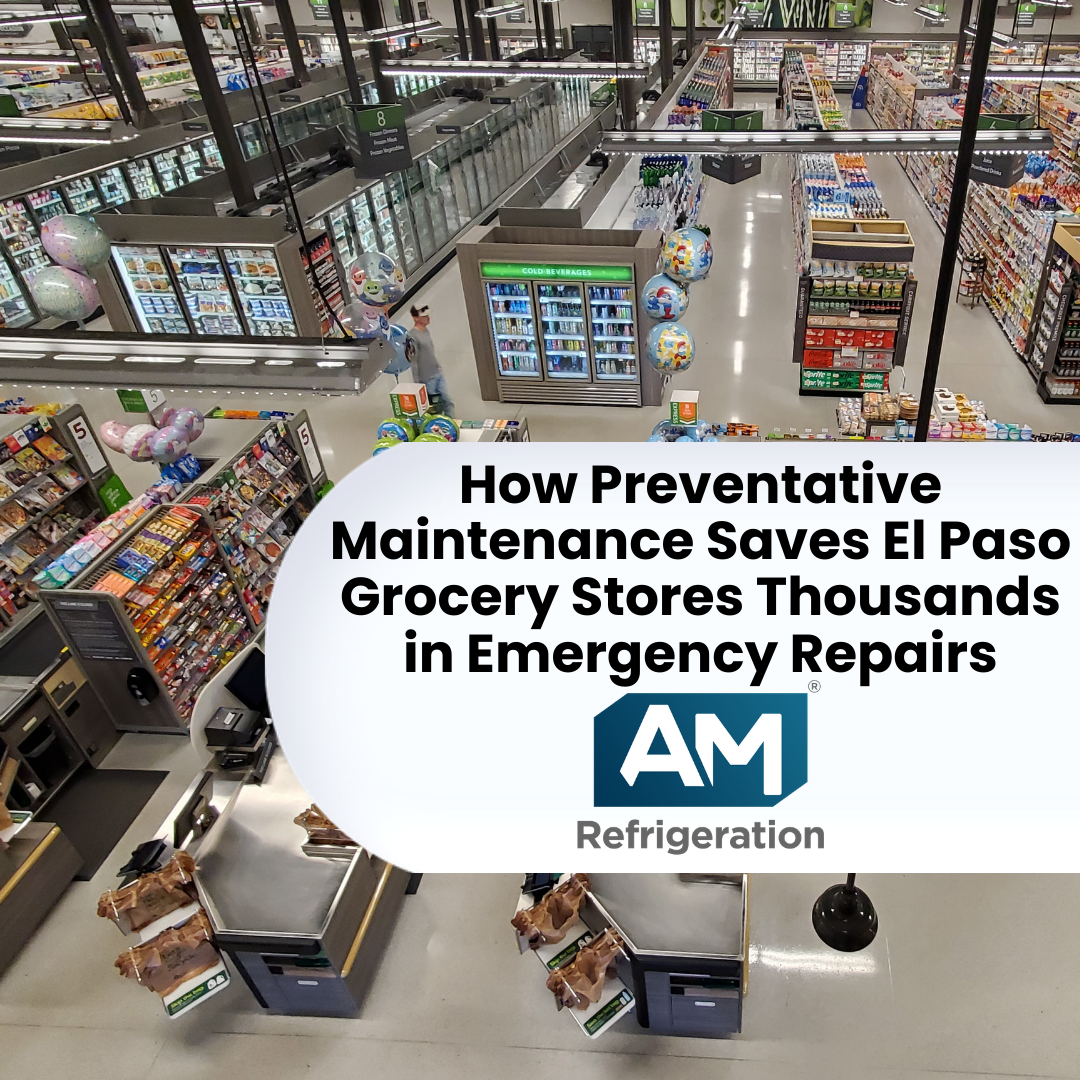
El Paso grocery stores lose thousands to refrigeration breakdowns. AM Refrigeration's preventative maintenance plans protect your inventory and bottom line.
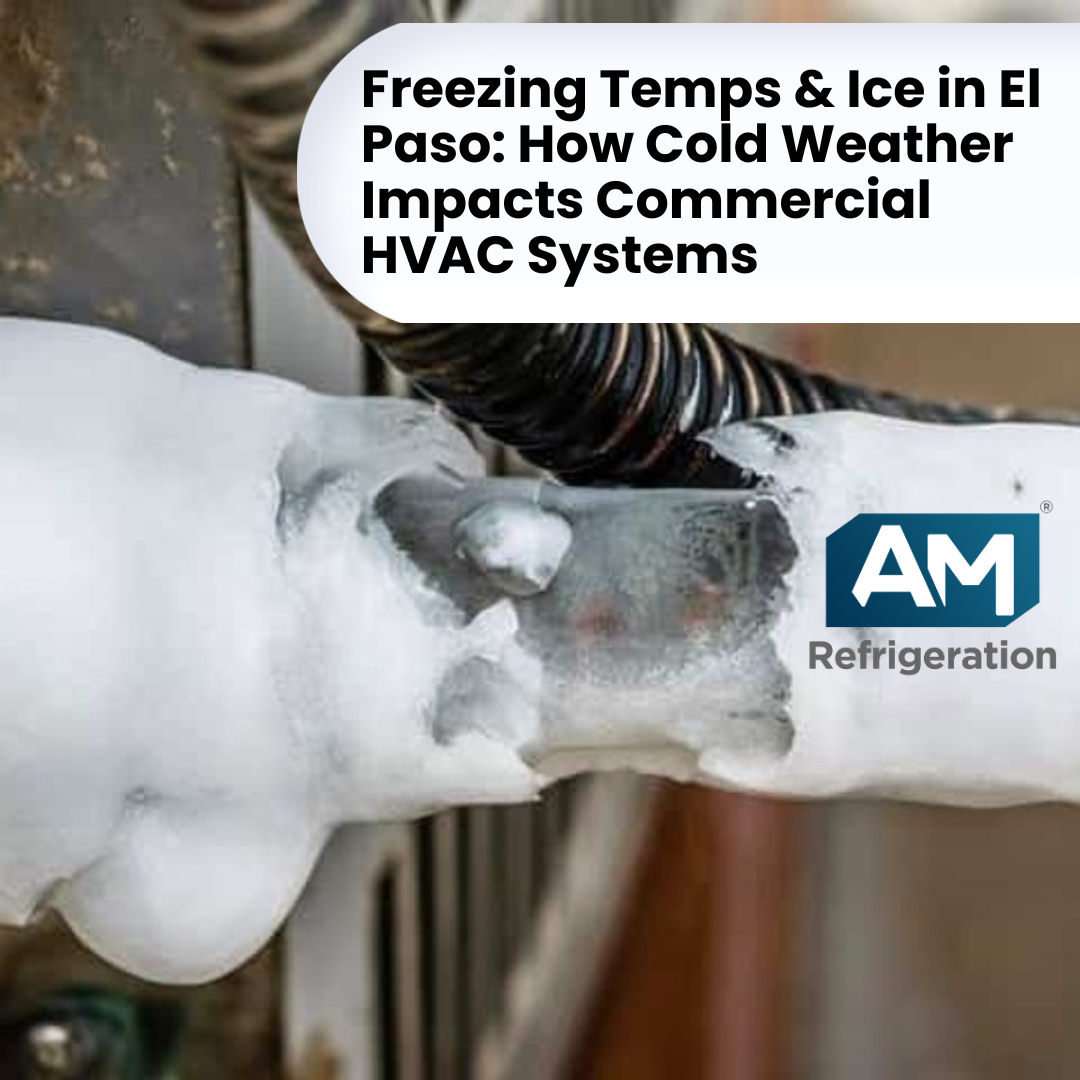
El Paso isn’t known for harsh winters, which is exactly why freezing temperatures and potential ice events can catch building owners off guard. When cold snaps roll through the Borderland, commercial HVAC systems are often pushed outside the conditions they’re typically designed to operate in. Without preparation, even a short freeze can lead to equipment damage, downtime, and costly repairs. Here’s how freezing weather impacts commercial HVAC systems and what to watch for when temperatures drop. 1. Ice Buildup on Rooftop Units Most commercial HVAC systems in El Paso are rooftop units (RTUs). During freezing conditions, moisture from humidity, rain, or condensation can freeze on coils, fans, and exterior components. Ice buildup can: • Restrict airflow • Reduce heat transfer efficiency • Place excess strain on motors and fans • Lead to unbalanced operation or vibration If ice is allowed to accumulate, the system may struggle to maintain indoor comfort or shut down entirely as a protective measure. 2. Frozen Coils and Heat Exchangers When temperatures drop below freezing, evaporator or condenser coils can freeze if airflow is restricted or if the unit cycles improperly. Frozen coils can: • Crack or warp as ice expands • Reduce heating capacity • Cause system short cycling • Lead to long term efficiency loss In extreme cases, coil damage may require full replacement, which is a major and avoidable expense. 3. Drain Line and Condensate Pan Freezing Commercial HVAC systems rely on condensate drain lines to remove moisture. During cold weather, standing water in these lines or pans can freeze. This can result in: • Blocked drainage • Water backing up into the unit • Interior water damage once temperatures rise • Corrosion or rust over time A frozen drain line is one of the most common cold weather issues we see during El Paso freezes. 4. Increased Wear on Electrical Components Cold temperatures affect more than mechanical parts. Electrical components such as contactors, relays, and control boards can become brittle or less responsive in freezing conditions. Moisture combined with cold weather increases the risk of: • Electrical shorts • Sensor failures • Fault codes and unexpected shutdowns These issues often don’t show up immediately. They surface days or weeks later as intermittent failures. 5. Heating Systems Working Overtime When outdoor temperatures dip well below normal, commercial heating systems are forced to run longer cycles to maintain indoor comfort. This added demand can: • Expose existing mechanical weaknesses • Increase energy consumption • Accelerate wear on burners, heat exchangers, and motors • Reveal calibration or airflow issues that weren’t noticeable before If a system hasn’t been serviced recently, freezing weather tends to find the weak points fast. Why Cold Weather Prep Matters in El Paso Because freezing temperatures are relatively rare in our region, many commercial HVAC systems aren’t proactively winterized. That makes preparation and preventative maintenance especially important when cold weather is in the forecast. A quick professional inspection can help: • Verify proper airflow and defrost operation • Check drain lines and freeze protection • Inspect electrical components • Ensure heating systems are operating safely and efficiently Final Thought Freezing temperatures and ice don’t just create comfort issues. They create risk. For commercial buildings, downtime from HVAC failure can impact tenants, employees, customers, and operations. If your building experienced freezing conditions this week, now is the right time to have your system inspected. Catching minor cold weather damage early can prevent much bigger problems down the line.
Investing in new commercial refrigeration or HVAC equipment is a major decision for any business. Whether you’re upgrading an aging system, expanding your facility, or building something new from the ground up, the process can feel overwhelming without the right partner. At AM Refrigeration, we guide clients through every phase, from the first conversation to final startup, so there are no surprises, no shortcuts, and no guesswork. Here’s what you can expect when you work with our team. Step 1: Discovery, Planning, and System Design Every successful installation starts with understanding how your business actually operates. Before recommending equipment, our team evaluates: * Facility size and layout * Operating hours and peak load demands * Product types and temperature requirements * Local climate conditions, especially critical in West Texas and Southern New Mexico * Energy efficiency goals and utility considerations This step ensures the system is properly sized and designed. Not overbuilt. Not underpowered. The goal is long-term performance, not quick fixes. Why it matters: Poorly designed systems lead to higher energy costs, inconsistent temperatures, and premature equipment failure. Step 2: Equipment Selection and Procurement Once the system design is finalized, we help you select the right equipment for your operation. This includes: * Commercial refrigeration systems such as walk-ins, display cases, rack systems, and low-temperature applications * HVAC equipment for comfort, airflow, and climate control * Controls, monitoring systems, and compliance components Because AM Refrigeration works directly with trusted manufacturers and suppliers, we manage lead times, logistics, and delivery coordination so equipment arrives when the site is ready. Why it matters: The right equipment, ordered correctly and on time, keeps projects on schedule and budgets under control. Step 3: Site Preparation and Pre-Installation Work Before installation begins, our technicians prepare the site to ensure a clean and efficient install. This may include: * Demolition or removal of existing equipment * Electrical and piping coordination * Structural modifications or reinforcements * System evacuation and moisture removal * Safety planning and job staging All work is planned to minimize disruption, especially for live facilities like grocery stores, restaurants, and occupied commercial buildings. Why it matters: Skipping preparation leads to delays, rework, and reliability issues later. Step 4: Professional Installation by Certified Technicians This is where experience shows. Our team installs each system according to manufacturer specifications, local codes, and industry best practices. Every technician on site understands their role, whether it’s piping, electrical, controls, or final cleanup. You can expect: * Coordinated crews working efficiently * Clean and organized job sites * Clear communication throughout the install * Attention to details that impact long-term system performance Why it matters: Installation quality directly affects equipment lifespan, efficiency, and reliability. Step 5: System Start-Up, Testing, and Commissioning Installation is not the finish line. Startup and commissioning are critical to ensuring your system operates exactly as intended. During startup, our team: * Tests pressures, temperatures, and electrical components * Verifies proper airflow and refrigerant charge * Calibrates controls and safety systems * Confirms performance under real operating conditions We do not rush this step. A properly commissioned system runs more efficiently and experiences fewer issues over time. Why it matters: Skipping or rushing startup leads to callbacks, downtime, and avoidable failures. Step 6: Training, Documentation, and Ongoing Support Once the system is live, we make sure your team knows what to expect moving forward. We provide: * Operational walkthroughs when needed * Maintenance recommendations * System documentation and warranties * Ongoing service, inspections, and maintenance plans AM Refrigeration remains a partner long after installation. Our service teams are available to keep your system running reliably year-round. Why it matters: Ongoing maintenance protects your investment and reduces costly downtime. Why Businesses Across West Texas Trust AM Refrigeration For decades, AM Refrigeration has supported grocery stores, restaurants, schools, industrial facilities, and commercial buildings throughout El Paso, West Texas, and Southern New Mexico. Clients choose us because we deliver: * Start-to-finish project management * Skilled technicians with real-world experience * Systems designed for extreme heat and demanding environments * Long-term reliability, not short-term fixes When you invest in new equipment, you deserve a partner who understands the full lifecycle of your system. Ready to Get Started? If you’re planning to purchase, replace, or upgrade commercial refrigeration or HVAC equipment, AM Refrigeration is ready to guide you from planning through startup and beyond. Contact us today to schedule a consultation or discuss your next project.